01
Start with a fashion reference
Use fabric, material, garment or outfit imagery as the visual starting point for the idea.
Explore fabrics, outfit concepts and fashion directions with AI, then visualize the idea on a person photo before stitching, production or customer decisions.
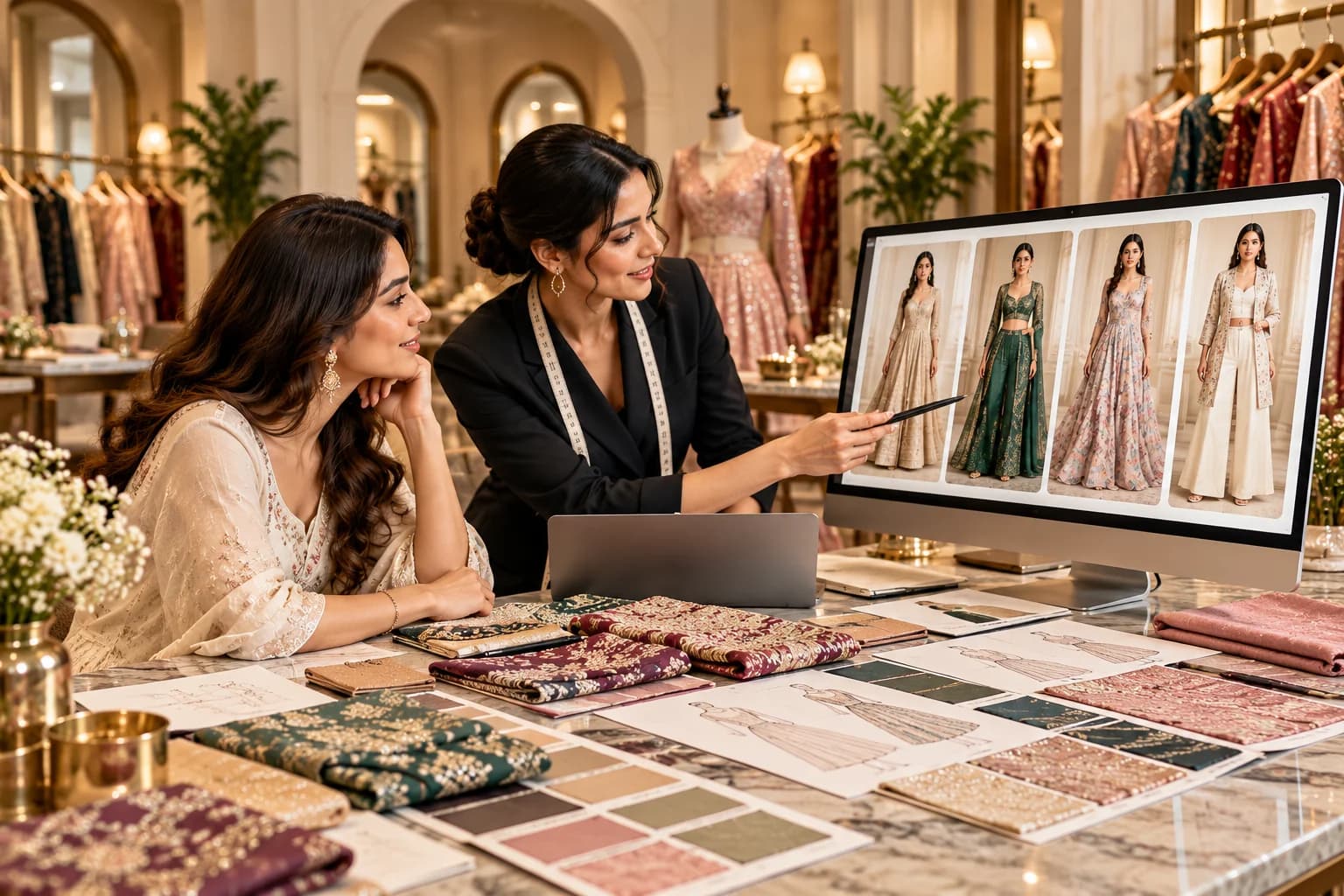
Boutique workflow
Visualize before stitching
Quick answer
Fashion Try-On AI helps boutiques and fashion designers explore clothing ideas visually before stitching or production. A boutique can start with a fabric, garment or outfit reference, generate an AI fashion concept and visualize the fashion direction on a person photo. This can support customer discussions, design exploration and pre-stitch decisions, while final measurements, fabric behavior, garment construction and fit should still be verified professionally.
Use AI as an early visualization layer while keeping professional design, tailoring and production decisions in the real-world workflow.
Use fabric, material, garment or outfit imagery as the visual starting point for the idea.
Use AI to develop the reference into a broader clothing or styling concept.
Explore the fashion direction on a person photo through virtual try-on.
Use the visualization as a reference before confirming measurements, construction and production.
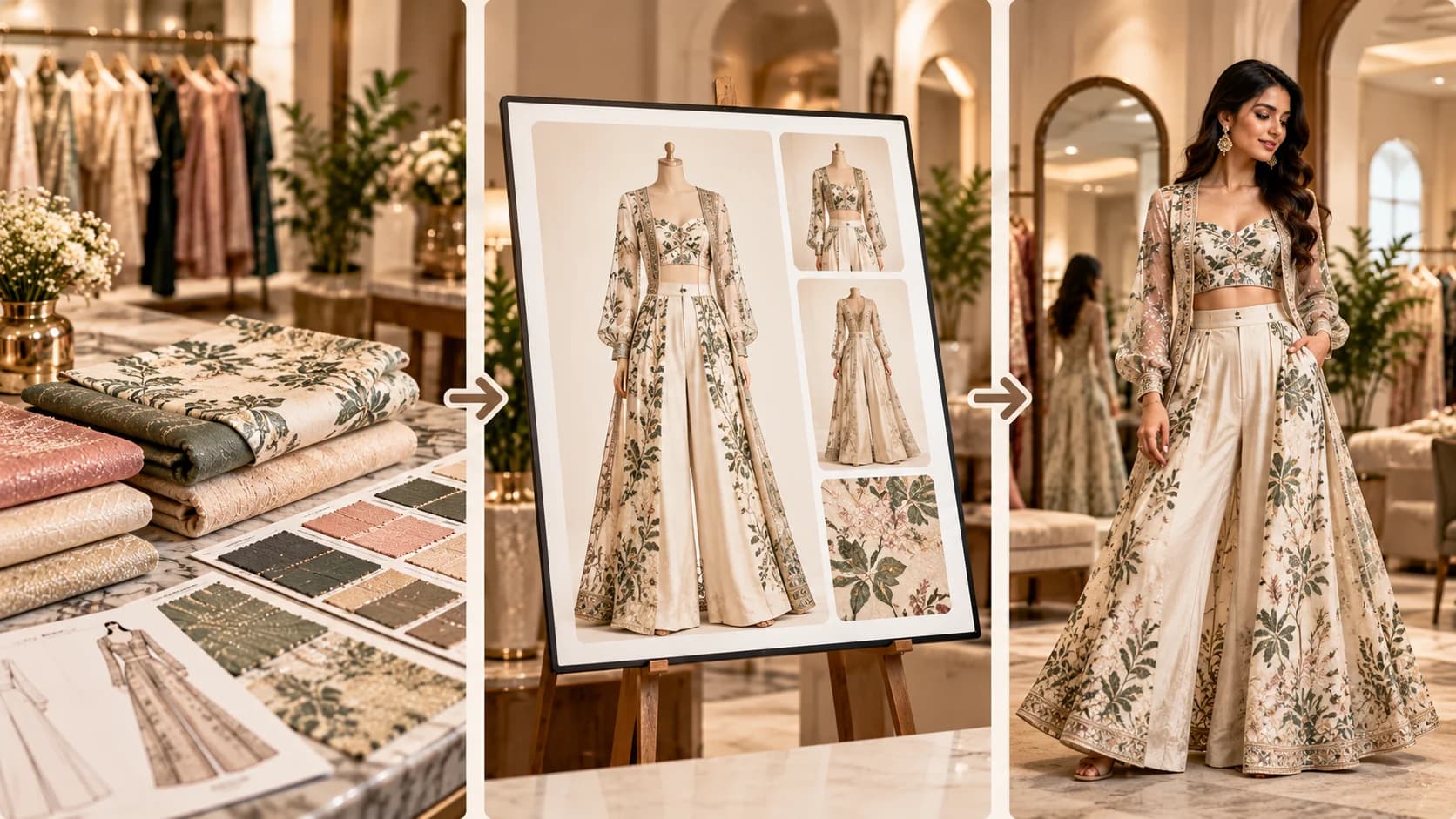
A boutique workflow can move from a material or clothing reference to an AI fashion concept and then to a visual representation on a person photo.
01
Begin with fabric, material or an existing garment and make the intended fashion direction clear.
02
Explore a garment or styling concept before committing to the physical version.
03
Connect the fashion concept with a person photo for another visual reference.
Boutiques often work with material before a finished garment is available. Fashion Try-On AI can use a fabric or material reference as the beginning of an AI outfit concept, giving you another way to explore the fashion direction before stitching.
Explore Fabric to Outfit AIStart with the material that may eventually become the physical garment.
Translate the material into a broader outfit or garment direction.
Continue into virtual try-on to explore the fashion direction on a person.
Confirm real fabric behavior, measurements and construction separately.
When a finished garment does not yet exist, an AI image can provide another visual reference for discussing possible fashion directions.
Use visualization to compare broader garment or styling directions while an idea is still flexible.
Give customers another visual reference when discussing what an available material might become.
Explore different clothing categories or styling ideas before deciding what should move forward.
Use the generated concept as a visual discussion aid rather than relying only on verbal descriptions.
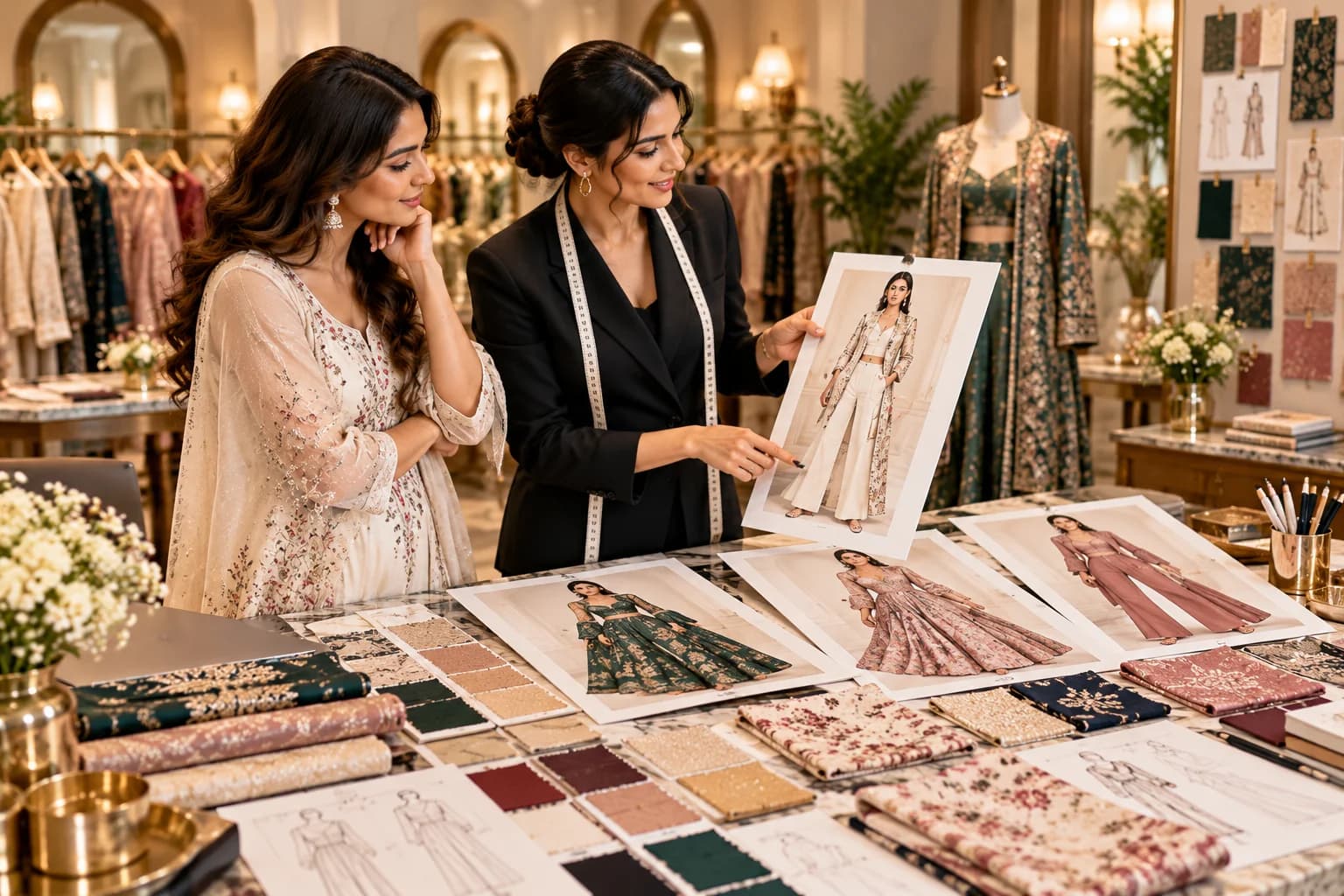
A garment concept becomes easier to discuss when you can also explore its overall fashion direction on a person photo. Virtual try-on adds wearer context without claiming to predict exact physical fit.
Boutiques working with Indian fashion can use dedicated workflows for garment categories where fabric, occasion styling and pre-stitch visualization are especially relevant.
Indian fashion
Explore sarees, lehengas, Anarkalis, salwar suits, kurtas and other Indian fashion directions.
Saree workflow
Explore saree visualization, fabric ideas, blouse relationships and broader styling directions.
Lehenga workflow
Explore lehenga visualization for bridal, wedding and occasionwear fashion directions.
The same visualization workflow can support different early-stage fashion conversations without replacing the specialist work required to make the final garment.
Explore visual fashion directions around fabrics, garments and customer ideas before the physical garment is finalized.
Use AI visualization as an early concept reference while professional design and construction remain separate.
Explore how clothing or fashion concepts may appear on a person when a visual reference would help presentation.
Use a generated concept to support discussion before moving into measurements, patterns and physical construction.
AI + professional expertise
AI can support
Professionals still verify
AI-generated fashion images are visual concepts. They are not exact tailoring patterns, fit guarantees or production specifications.
The strongest use cases are situations where the fashion direction is still being explored and a visual reference can help communicate the idea.
Explore what that material might look like as a broader outfit direction before stitching begins.
Generate visual references while comparing possible clothing or styling directions.
Explore the fashion direction on a person photo instead of viewing only a standalone garment.
Use an AI-generated concept to make an early-stage fashion discussion more visual and concrete.
Use the dedicated guides below when you want to go deeper into fabric-to-outfit visualization, Indian clothing or specific garment categories.
Material workflow
Start with fabric or material and explore how it could become an AI outfit concept before stitching.
Indian fashion
Explore virtual fashion visualization across sarees, lehengas, kurtas and other Indian clothing.
Dedicated workflow
Explore saree-specific visualization, fabric ideas, blouse relationships and styling directions.
Practical answers about using AI fashion visualization, fabric-to-outfit concepts and virtual try-on in boutique and designer workflows.
Fashion Try-On AI can help boutiques explore clothing ideas visually before stitching or production. A boutique can start with a fabric, garment or outfit reference, generate an AI fashion concept and visualize the fashion direction on a person photo. Final measurements, construction, fabric behavior and physical fit should still be verified separately.
Yes. A fabric or material image can be used as the starting point for an AI outfit concept. This can help a boutique explore possible garment directions before physical stitching, while exact color, texture, embroidery, drape and construction may differ in the finished garment.
Yes. Fashion designers can use Fashion Try-On AI as an early visualization tool for exploring garment directions, material ideas and wearer presentation. It is intended to support visual exploration rather than replace professional design, pattern making or garment construction.
Fashion Try-On AI can visualize a fashion direction on a person photo using a garment, outfit or fabric reference. The generated image is an AI visualization and should not be treated as a guarantee of exact physical fit, measurements or final garment appearance.
Yes. Fashion Try-On AI supports Indian fashion directions including saree and lehenga visualization. Dedicated saree, lehenga and broader Indian clothes virtual try-on guides are also available.
No. Fashion Try-On AI supports visual exploration and communication. Professional expertise is still needed for measurements, pattern cutting, fabric behavior, garment engineering, construction, alterations and final fit.
Not necessarily. AI-generated results can vary in color, print, texture, motif placement, borders, embroidery and other details. The generated image should be used as a fashion visualization rather than an exact production specification.
No. Fashion Try-On AI creates a visual representation of a fashion direction on a person photo. It does not guarantee exact garment measurements, physical fit, fabric drape or tailoring outcomes.
Explore your next fashion idea
Start with a fabric, garment or outfit reference, explore the fashion direction with AI and visualize the concept on a person before moving into real-world stitching or production.
Explore Fashion with AI