01
Upload your fabric
Start with a clear photo of the fabric or material you want to explore as clothing.
Upload a fabric or material reference, choose the clothing style you want to explore, generate an AI outfit concept and visualize the fashion direction on your photo before stitching or production.
Material-led workflow
Explore before stitching
Quick answer
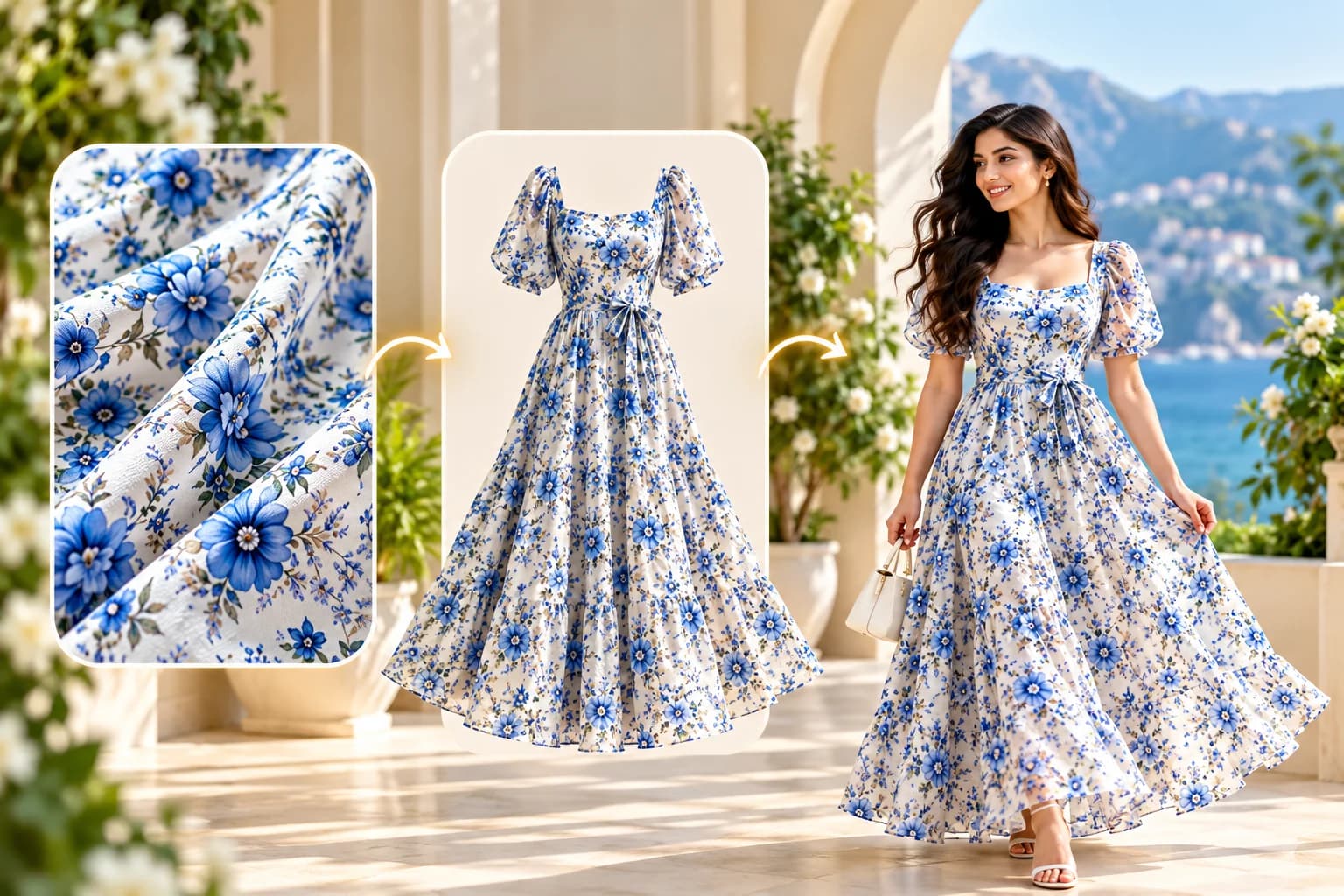
Yes. Fashion Try-On AI can use a fabric or material image as the starting point for an AI outfit concept. You can upload the material, choose a fashion direction, generate an outfit visualization and then explore that fashion direction on a person photo. This can help you visualize fabric before stitching or production, although AI-generated colors, patterns, drape and construction may differ from the real material and finished garment.
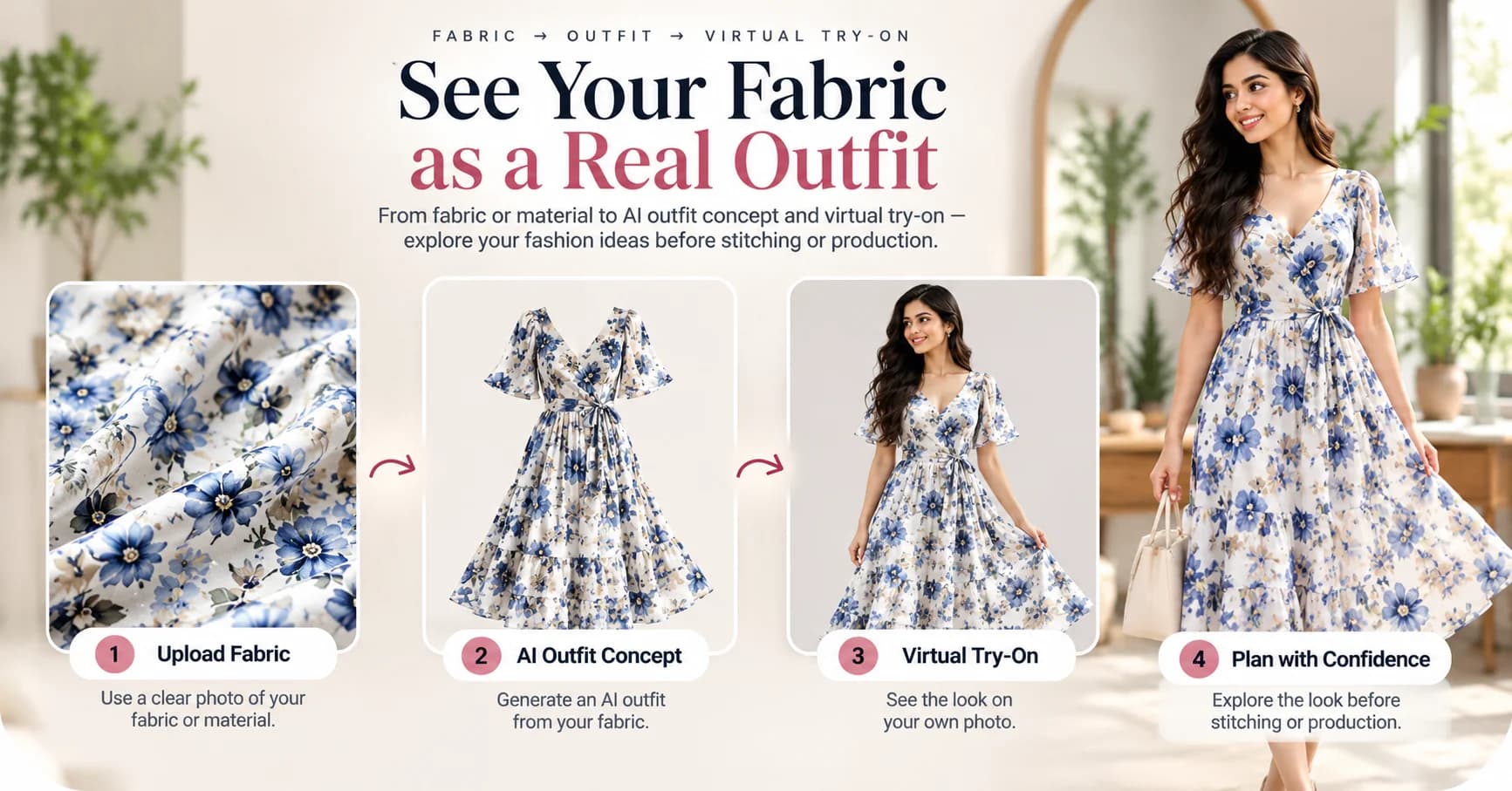
Move from material inspiration to an outfit concept and virtual try-on in four clear stages.
Start with a clear photo of the fabric or material you want to explore as clothing.
Select the clothing or fashion style you want the material to inspire.
Use AI to translate the material reference into a standalone outfit visualization.
Continue into virtual try-on to explore the resulting fashion direction on a person photo.
The workflow connects the material you already have with an AI garment concept and a visual preview of the fashion direction on a person.
01
Begin with the fabric, print, embroidery or material you want to explore.
02
Translate the source material into a selected fashion direction with AI.
03
Explore the resulting fashion idea on a person photo before the physical garment exists.
A useful source image gives the AI visible material cues to work from. Different materials can inspire different garment and styling directions.
Explore how visible prints and repeated patterns might translate into an outfit direction.
Use embroidery-rich material as inspiration while remembering that exact placement can vary in AI results.
Show borders clearly when they are an important part of the material and intended garment idea.
Use solid-color material to explore silhouette, garment category and broader styling direction.
Explore checks, florals, geometric patterns and other visible textile directions as clothing concepts.
Use visually distinctive material as an early fashion reference while treating fine details as approximate.
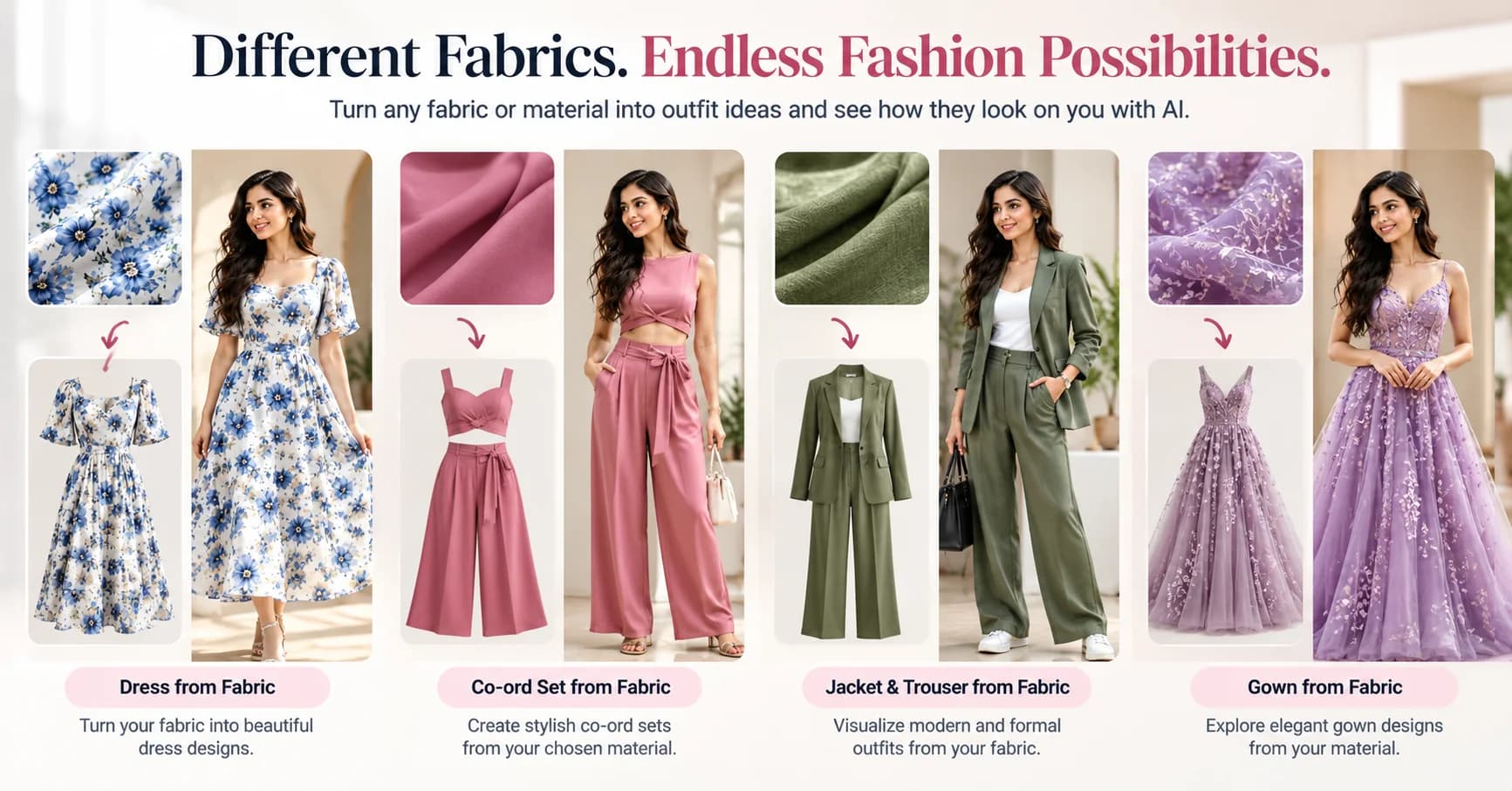
Fabric-to-outfit visualization is not limited to one clothing category. The same material-led idea can be explored across different fashion directions.
Fabric is often purchased before the final garment exists. AI visualization gives you an earlier way to explore what that material might become before moving into physical stitching, tailoring or production.
Explore Your FabricUse the material itself as the beginning of the fashion exploration process.
Compare how the material could work across different clothing and styling ideas.
Connect the outfit concept to a person image through virtual try-on.
Use the visualization as a reference before confirming real measurements, patterns and stitching.
Fabric-to-outfit visualization can support early exploration for individuals and fashion professionals without replacing physical design, tailoring or production decisions.
Explore what fabric you already own could look like as a finished fashion direction before deciding what to make.
Use material-led visualization as an early concept reference when exploring garment and styling directions.
Create visual references around fabrics and garment ideas when discussing possible fashion directions.
Use the AI concept to communicate an overall visual direction, then confirm measurements and construction separately.
The source image is part of the AI's visual context. A clear photograph makes colors, patterns, borders and other visible material cues easier to interpret.
Read How Fashion Try-On AI WorksPhotograph the material in even lighting so important colors and visible details are easier to interpret.
Avoid using a tiny crop when the broader print, pattern or material appearance matters to the outfit idea.
If embroidery, motifs or borders matter to your idea, include them clearly in the source image.
A clearer material surface generally gives the AI a more useful visual reference than a heavily folded or blocked image.
Understanding the result
AI can help you explore
Verify in the real garment
AI-generated fashion images are visual concepts. Results can vary from the real fabric and final garment, especially in fine patterns, texture, embroidery, drape and construction.
This page focuses on the broad fabric-to-outfit workflow. Use our dedicated guides when you want to explore specific Indian clothing categories.
Indian fashion
Explore sarees, lehengas, Anarkalis, salwar suits, kurtas and other Indian clothing directions.
Dedicated guide
Explore saree-specific virtual try-on, fabric ideas, blouse relationships and styling directions.
Dedicated guide
Explore lehenga visualization for bridal, wedding and occasionwear fashion directions.
Practical answers about using a fabric image to explore an AI outfit concept and virtual fashion visualization before stitching.
Yes. Fashion Try-On AI can use a fabric or material image as the starting point for an AI outfit concept. You can choose a fashion direction, generate an outfit visualization and then explore that direction on a person photo. The result is an AI fashion visualization rather than an exact simulation of the final physical garment.
Yes. You can use your own fabric or material image as an input. For a more useful result, use a clear image with good lighting and make important details such as the print, motif, texture or border visible.
Fashion Try-On AI can help you explore how a fabric or material could translate into a selected clothing direction. It can generate an AI outfit concept from the material and help you visualize the broader fashion idea before stitching or production.
Fashion Try-On AI supports Indian fashion directions as part of its broader fashion workflow. Depending on the style you want to explore, material can be used as a starting point for saree, lehenga and other Indian clothing ideas. Dedicated Indian clothes, saree and lehenga guides are also available.
Yes. The workflow can continue from the generated outfit concept into virtual try-on so you can explore the fashion direction on a person photo. This helps connect the material idea, garment concept and wearer visualization in one workflow.
Yes. One useful purpose of fabric-to-outfit AI is early visualization before committing to stitching. It can help you explore garment directions and communicate an idea more clearly, while final measurements, construction and tailoring should still be confirmed with a tailor or designer.
Not necessarily. AI-generated results can vary in color, motif placement, embroidery, borders, texture and other fine details. Use the result as a fashion visualization rather than a guarantee that every material detail will be reproduced exactly.
No. An AI outfit visualization is not an exact sewing pattern, technical specification or guarantee of garment construction. Final measurements, pattern cutting, fabric behavior and production decisions should be verified separately.
Start with your own material
Use your material as the starting point, explore an AI outfit concept and continue into virtual try-on before making the real-world stitching or production decision.
Turn Your Fabric Into an Outfit